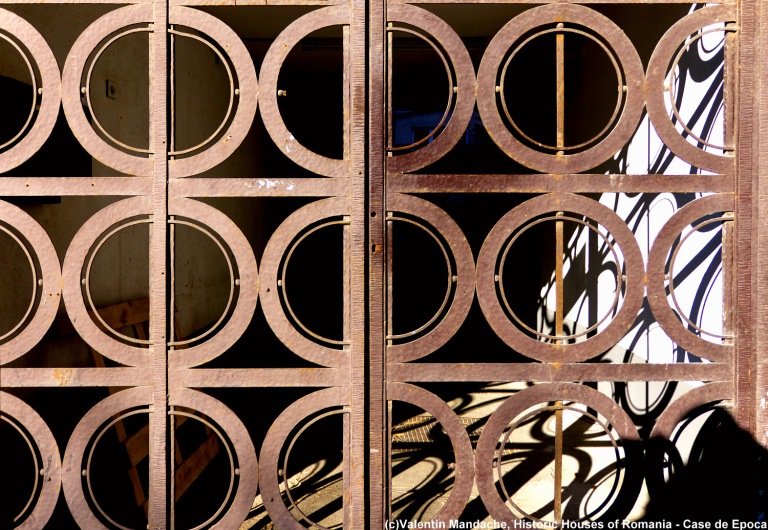
Art Deco style gate, dating from the mid 1930s, Piata Romana area, Bucharest
An interesting Art Deco design vestige, dating from the cultural peak period of Bucharest, in the third and fourth decade of the last century, now uncared and unloved by its post-communist inhabitants, still stoically surviving among their ugly, uncouth renovations of period buildings.
I divide the evolution of the Neo-Romanian architectural style in three main phases. The early one lasted from its initiation in 1886 by the architect Ion Mincu with his edifice in the national style, Lahovary house, until 1906 when the Royal Jubilee exhibition took place, showing to the public its grand pavilions, many designed in an elevated unitary manner that “canonised” the style, which marked the beginning of its mature phase. It reached an apogee after the country’s victory in the Great War and subsequently in the 1920s decade, when was adopted all over the territory of interbellum Romania. The late 1920s, and the 1930s decade saw the increase popularity and in the end prevalence of the international styles Art Deco and Modernism, which induced a crisis of expression for the Neo-Romanian, thus marking its late phase. The national style managed to strive through an imaginative synthesis with the Art Deco and also Mediterranean inspired forms, resulting in extremely interesting designs. The evolution of the style practically ended with the instauration of communism in the winter of 1947, under the impact of the ideologically driven architectural priorities of the new political regime. It continued to have echoes for another two decades especially in vernacular forms and in motifs used on post-war edifices.
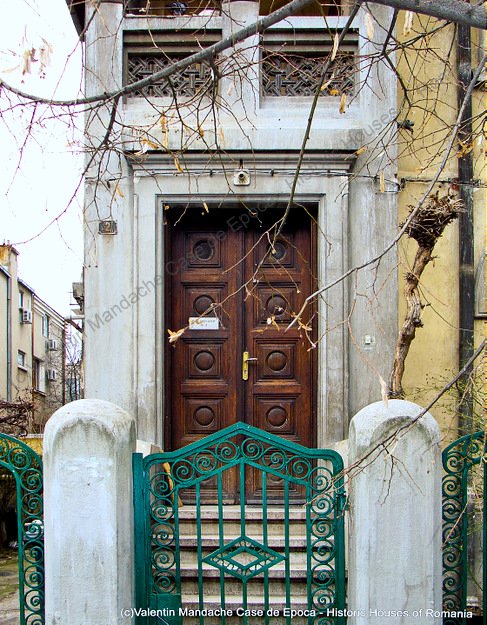
The street gate and doorway assembly presented above belongs in its design outline and period when it was built to the late phase of development of the Neo-Romanian style. The wrought iron gate is inspired from Brancovan style church or altar doors, but expressed in coordinates close to Art Deco. The two gate posts are also derived from church or medieval citadel towers, conforming with the national-romantic message of the style. The door itself shows a series of square panels pointed each by a central disc, which can be understood as the outline of an ethnographic solar disc or an interpretation of a Greek cross. The wall surround of the door is basically an adaptation of a church door opening in reduced to essence coordinates of the Art Deco style. The doorway assembly dates from the beginning of the 1930s, and as the time progressed into that decade, the expression of the Neo-Romanian forms in an Art Deco “ambiance” became even more prevalent and captivating as a form of architectural language.
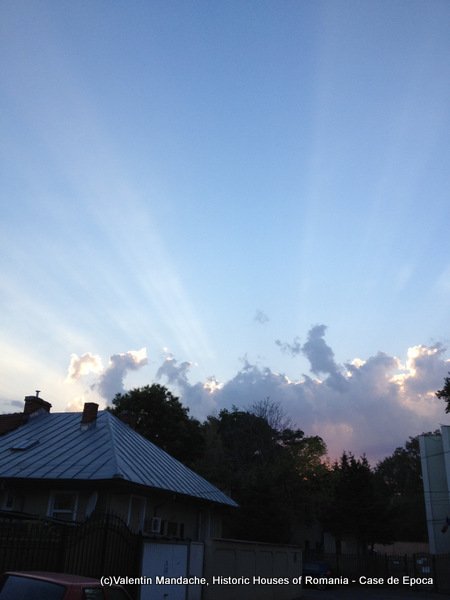
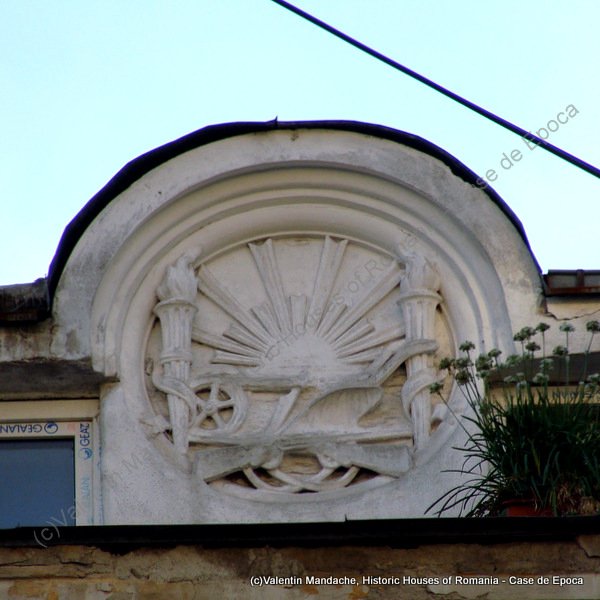
I am a great fan of the cheerful Art Deco panels that depict sunbursts, rainbows or southern seas themes. In that spirit I have put together a real sunburst photographed last summer in Grivita - Domenii area of the city, a quarter that is still preserving its inter-war charm when it was built up in large part in the Art Deco style, then much in vogue in Bucharest, and the emblem of an insurance company, ornament that dates from the Art Deco era, located in the town centre. Looking at the natural sunburst is easier to understand the message, optimism and confidence exuded by the Art Deco panels of Bucharest and the culture of that beautiful time in the history of architecture.
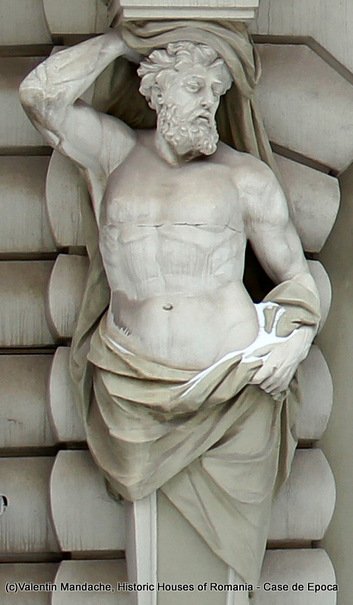
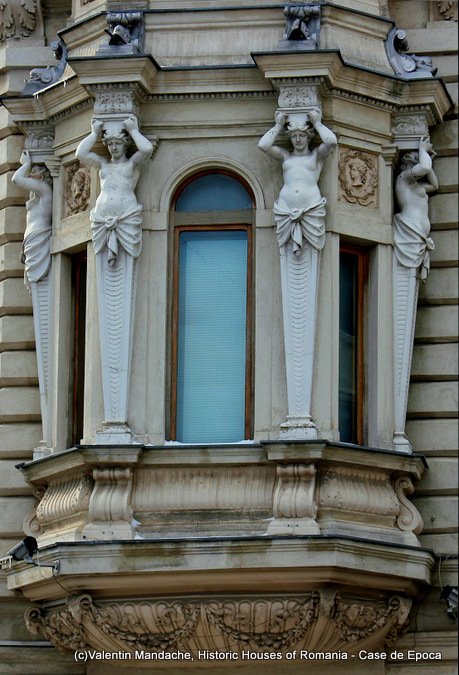
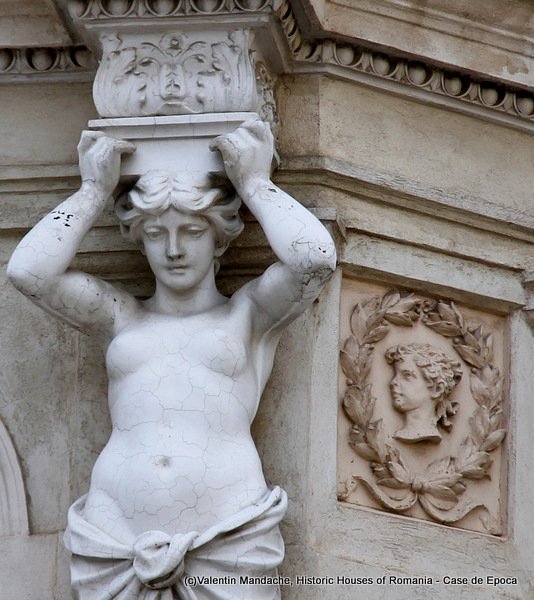
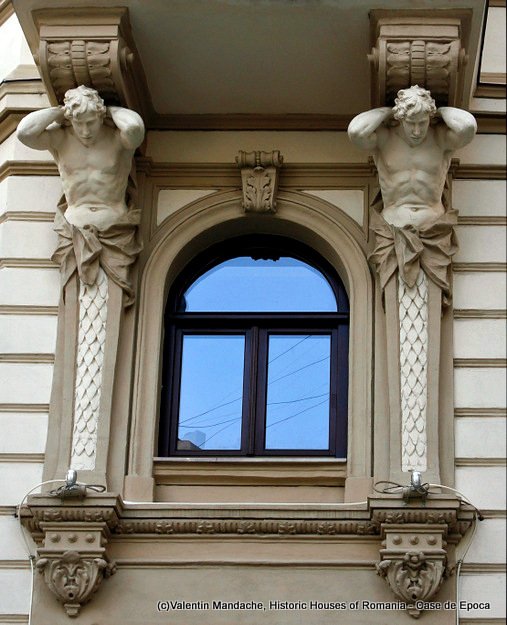
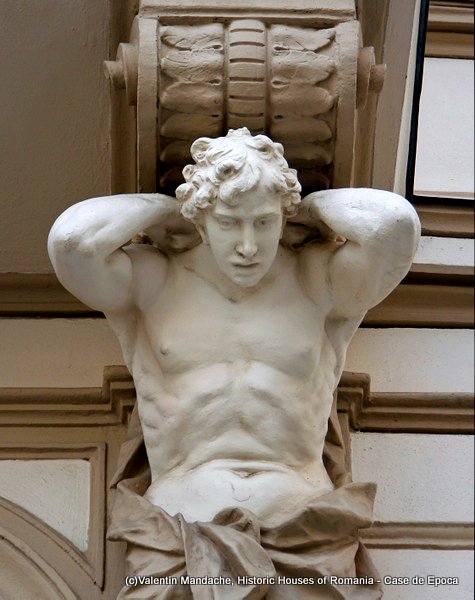
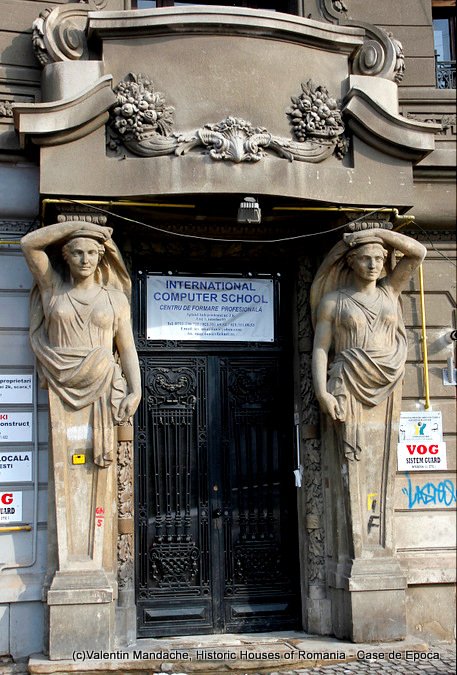
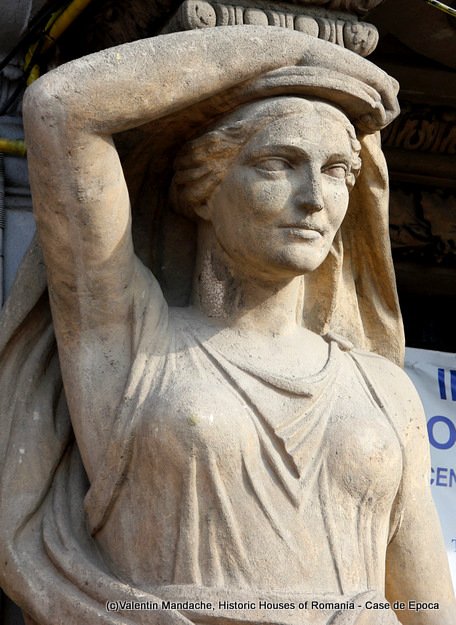
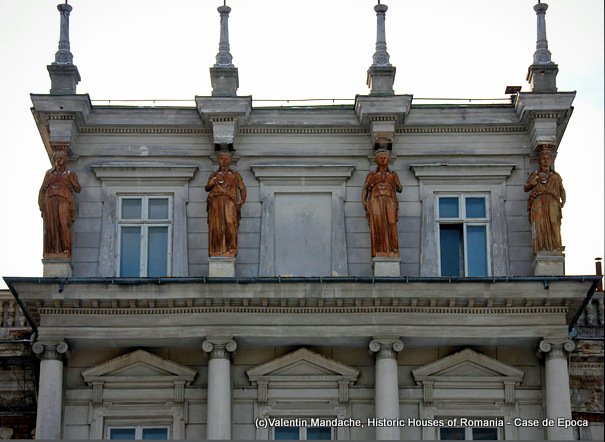
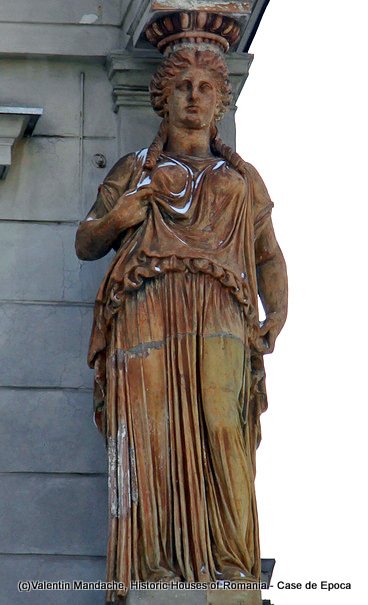
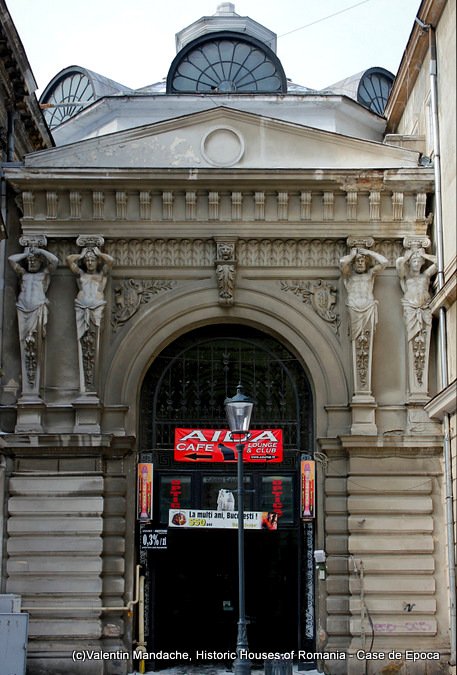
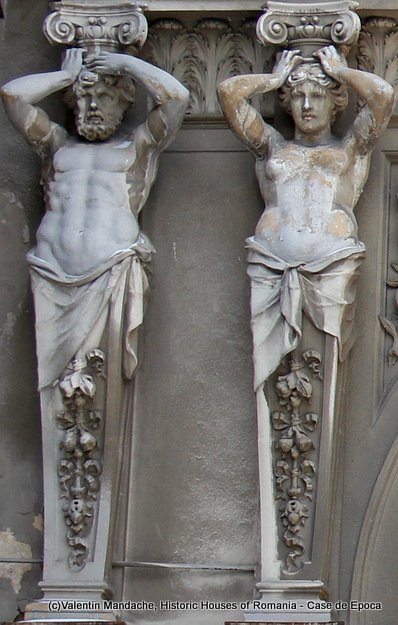
I tried to profit yesterday of the lull in between snowfalls and blizzards that affect Bucharest at the end of this January, and shoot a few photographs on the theme of atlantes and caryatides that embellish some of the historic buildings of Romania’s capital. If on the one hand the term caryatid (pl.-s/es) is well known, as the female figure appearing to support on her head the architectural structure above, the name coming form that of the sculpted goddesses that sustain the lintel of the Erechtheion temple on Athens’ Acropolis, atlantes, on the other hand, is somehow confusing for being the plural of the term atlas, the classical Greek god that support the world on his head and shoulders, a male counterpart of a caryatid. Bucharest does not have too many such ornaments, which are the province of the high historicist styles, encountered also sometimes on more modern buildings, but for a keen eye they reveal themselves on house corners, side streets or at the top of façades of some of the city’s historic edifices. Bellow is a selection of some of the most impressive atlantes and caryatides that adorn Romania’s capital, put in place in a period spanning from the mid-c19th to the 1930s, in styles ranging from neo-Renaissance, neo-rococo, Beaux Arts to classicized Art Deco.
I endeavour through this series of periodic articles to inspire appreciation of the historic houses of Romania, a virtually undiscovered, but fascinating chapter of European architectural history and heritage.
***********************************************
If you plan acquiring or selling a historic property in Romania or start a renovation project, I would be delighted to advice you in sourcing and transacting the property, specialist research, etc. To discuss your particular plan please see my contact details in the
Politehnica tube station, Bucharest - ornamental stone, laid in the mid-1980s, photo Valentin Mandache
Bucharest’s public and private edifices erected in the last two decades, since the fall of communism, are, apart from the general forgettable design, built in high proportion using mass produced imported materials. Most of that is cheap, low quality, characterless and as regards the resulted architecture, can in my opinion, easily be categorised at kitsch. That situation also reflects the tastes and values of the actual generations engaged in building or renovating edifices of this town and country. They are in such stark contrast with the times of in the inter-war and subsequent communist periods when the architectural materials were in greatest proportion sourced within the country. That produced interesting and attractive results, with the ornamental and construction stone sourced in the Carpathian Mountains or in rocky hills of the province of Dobrogea, on the Black Sea coast, which are from that point of view a wonderful geological kaleidoscope, a bottomless source of high quality marble, limestone of different sorts, travertine, granite of various colours and grains, basalts, sandstones, etc. I have in the image above a sample of that fabulous panoply of ornamental stone used in one of the grand communist era projects, Bucharest’s metro transport system. It shows the pavement of the Politehinca station, composed of red limestone peppered by Jurassic age marine fossils, which was sourced probably in the Apuseni (Western) Carpathians, the rock being formed in a geological age when those parts were a continental shelf covered by the warm seas on the Equator. My Dr. Martens shoes stand on a band of nicely granulated pinkish granite, sourced in my opinion in northern Dobrogea (it may also be from the Apuseni Mountains). The composition is evocative of the geographical and geological identity of this country, a fact which is no longer encountered within the pitiful built landscape of the actual post-communist years.
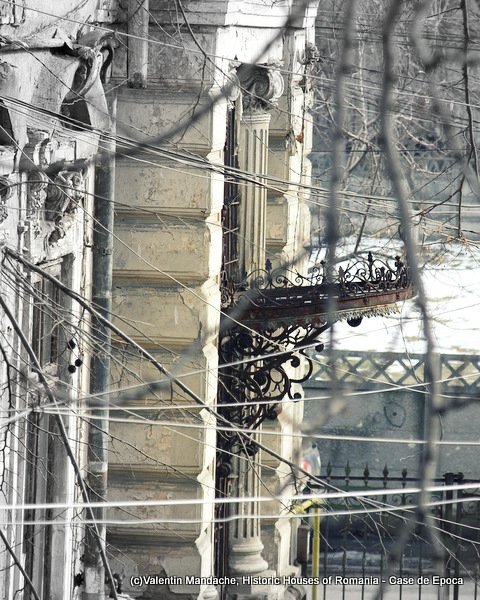
This is an early type of Little Paris style doorway awning, dating from the early 1890s, being a precursor of the clamshell one, which was typical of the Art Nouveau fashions. Most of these examples, now rare, are in a bad state of repair, and despite the fact that they are important markers of Bucharest’s architectural identity and history, remain uncared and unloved, ignored or even sold for scrap iron, a reflection how the local citizens, after the decades of communism and shallow post-communist transition, value their heritage.
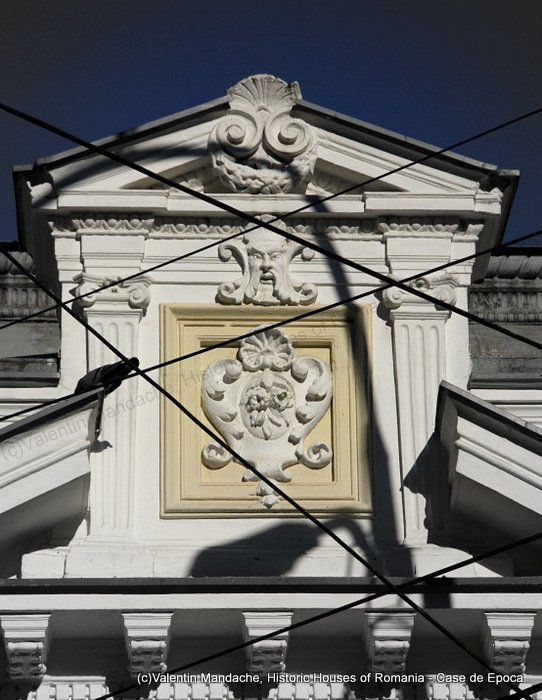
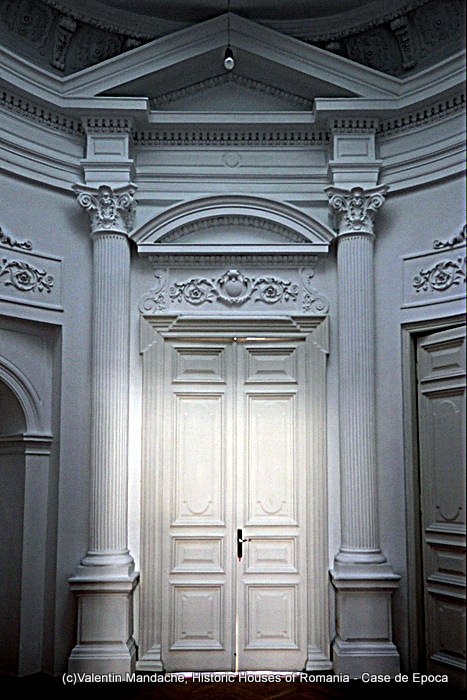
The two images in this article are from the building, which was, in the 1980s, at the height of Ceausescu’s communist totalitarianism, the American Library, the United States’ embassy’s cultural arm. I was a student at the University of Bucharest then and became a member of this library that constituted a true and proper oasis or refuge from the distorted reality and terror of the daily life in Romania under that primitive dictatorship. The building which was then rented by the embassy from the state, was given in the last decade or so, back to its former owners, the Gerota family, who have it now on the market to let out as office spaces.
The US embassy obviously took excellent care of this landmark edifice of La Belle Époque period Bucharest, which is one of the amplest and now best preserved Little Paris style houses of Romania’s capital. I had recently the opportunity to revisit the building and take a series of photographs. I hope that this visual sample presented here would convey something from its magnificence and sense of Bucharest’s character as the Little Paris of the Balkans.
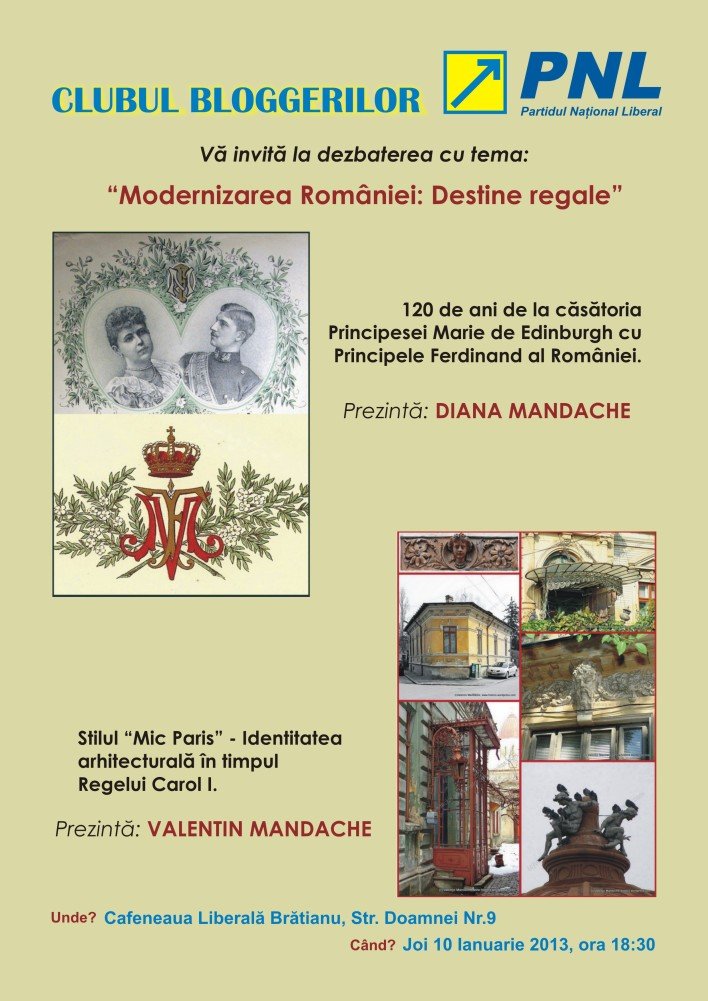
The event is hosted by Cafeneaua Liberala (The Liberal Cafe, in Lipscani quarter of Bucharest), through the invitation the National Liberal Party Bloggers’ Club, Thursday 10 January 2013, 18.30h - 20.30h.
There are two presentations, followed by questions and discussions: -120 years since the marriage of Princess Marie of Edinburgh with Prince Ferdinand of Romania - by Diana Mandache and -The “Little Paris” style - architectural identity in the times of King Carol I - by Valentin Mandache.
***
The partitipants will also have the opportunity to buy the authographed volume entitled “Marie of Romania. Images of a Queen” de Diana Mandache, the first pictorial history of the life of Queen Marie of Romania: http://www.royalbooks.se/produkt/45/marie-of-romania-images-of-a-queen.html, and also the album “HM King Michael of Romania - A Tribute” by HRH Prince Radu http://www.royalbooks.se/produkt/44/h-m-king-michael-i-of-romania-a-tribute.html



 Valentin Mandache, architectural historian